Prepare your home for colder weather with a practical checklist that separates manageable seasonal upkeep from heating, gas, chimney and roofline work requiring professional help.
Key Takeaways
- Test smoke and carbon-monoxide alarms, inspect filters and keep at least 3 feet of clearance around heating equipment.
- Clean gutters only when the ladder can be positioned safely and well away from overhead electrical wires.
- Use appliance instructions—not a universal schedule—for dryer-vent cleaning and filter care.
- Leave furnace, heat-pump, chimney, boiler, flue and gas-pipe work to qualified professionals.
- Follow current manufacturer guidance and local requirements because service schedules and professional credentials vary by country.
Fall maintenance is partly about completing small jobs before cold weather arrives—and partly about recognizing when access, combustion equipment or gas systems make a job unsuitable for DIY work. This fall home maintenance checklist covers 12 tasks homeowners can generally handle safely, followed by six jobs to assign to a qualified professional.
Before You Start: Know Your Access Limits
Do not treat gutter cleaning or roof-edge work as routine if you cannot position a ladder safely. U.S. Occupational Safety and Health Administration guidance says ladders should be used only for their intended purpose, with clear footing, clean rungs and engaged stepladder locks. Never work from the top rung. For a leaning ladder, the guidance uses an approximate one-out-for-every-four-up setup.
These OSHA rules apply to workplaces, but the principles are useful for homeowners. Never use a ladder near overhead electrical wires. If the ground is unstable, the roofline is difficult to reach or you are not comfortable working at height, hire a professional.
12 Fall Home Maintenance Jobs You Can Do
1. Test Smoke and Carbon-Monoxide Alarms
Test every smoke and carbon-monoxide alarm and follow its instructions for battery and unit replacement. The U.S. Fire Administration recommends monthly testing and replacing smoke alarms that are 10 years old or older. A fall check is helpful, but it should not replace testing during the rest of the year.
2. Clean or Replace the HVAC Filter
Inspect the furnace or heat-pump filter and clean or replace it according to the equipment and filter instructions. The archived Canada Mortgage and Housing Corporation checklist recommends checking furnace filters monthly during the heating season. Filter care is a homeowner task; internal heating-system servicing is not.
3. Clean the Humidifier
If your heating system includes a homeowner-serviceable humidifier, clean it as directed by its manufacturer. The archived CMHC guidance recommends cleaning a humidifier two or three times during winter. Do not open sealed HVAC components or work around wiring, fuel lines or internal mechanical parts.
4. Create Space Around Heating Equipment
Move paper, furniture, fabrics and other combustible materials away from fireplaces, wood stoves, space heaters and radiators. U.S. Fire Administration guidance calls for at least 3 feet of clearance between heating equipment and anything that can burn.
5. Check Windows, Skylights and Weatherstripping
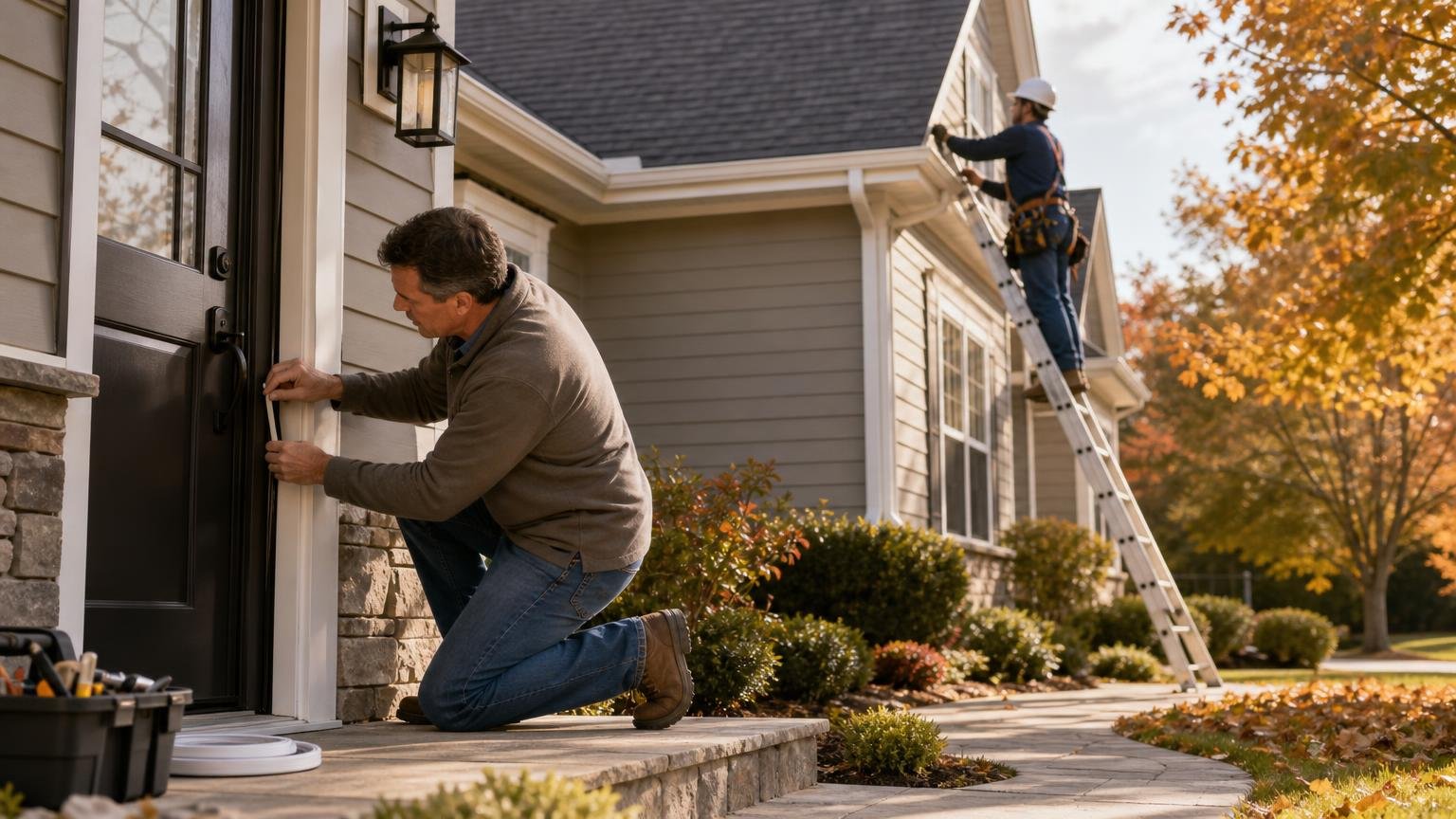
Look for loose, worn or missing weatherstripping around accessible windows and exterior doors. Inspect windows and skylights for visible defects, and use appropriate weatherstripping or window film where the product instructions allow. Do not climb onto a roof to inspect a skylight.
6. Clear Accessible Gutters and Eavestroughs
Remove leaves from gutters or eavestroughs only when you can reach them with a correctly positioned ladder and without stepping onto the roof. Keep the ladder area clear, make sure the rungs are not slippery and stay away from overhead electrical wires. Defer the job if safe access is uncertain.
7. Test Downspouts
After removing visible debris, check that downspouts can carry water away from the building. Complete this inspection from the ground whenever possible. If a blockage is above a safely accessible point or requires roof access, call a professional.
8. Inspect Grading Around the Foundation
Walk around the home and look for areas where soil has settled in a way that directs water toward the foundation. The CMHC checklist identifies grading as an important seasonal inspection point. If correcting the problem would require substantial excavation or foundation work, seek professional advice.
9. Disconnect Hoses and Drain Exterior Faucets
Disconnect garden hoses and drain them before freezing conditions arrive. Follow the home’s plumbing design and manufacturer instructions when preparing exterior faucets for winter; systems and shut-off arrangements vary.
10. Test Accessible Plumbing Shut-Off Valves
Confirm that you can identify and operate the home’s accessible water shut-off valves, following the CMHC seasonal checklist. Do not force a valve that is stuck, leaking or corroded. Those conditions call for professional plumbing help.
11. Clean the Dryer Lint Filter, Vent and Exhaust Duct
Remove lint from the clothes-dryer filter and clean accessible portions of the vent and exhaust duct according to the appliance and vent-system instructions. The U.S. Consumer Product Safety Commission identifies lint accumulation as a fire hazard. It does not give one universal cleaning interval, so use the schedule specified for your dryer and vent configuration.
12. Inspect Seasonal-Light Cords
Check seasonal lights and extension cords before use. Replace damaged cords rather than attempting temporary repairs. Follow product instructions and keep cords away from locations where they can be crushed, cut or exposed to conditions for which they are not rated.
6 Fall Maintenance Jobs to Leave to a Professional
1. Furnace or Heat-Pump Maintenance
Homeowners can usually handle filter replacement, but professional furnace and heat-pump maintenance involves components that should not be treated as a DIY project. The U.S. Department of Energy recommends annual professional maintenance.
Published schedules are not identical across all sources. An archived CMHC publication recommends service every two years for gas furnaces and annually for oil furnaces, while current U.S. Department of Energy guidance favors annual professional maintenance. Follow the equipment manufacturer’s instructions, current local requirements and the guidance applicable in your country.
2. Furnace, Chimney and Connector Inspection
The U.S. Fire Administration recommends professional inspection of furnaces, chimneys and chimney connectors each winter, with repairs completed before cool weather. Cleaning needs can vary with the appliance, fuel, use, deposits and inspection findings, so let the inspector determine the required work.
3. Boiler, Gas-Appliance, Flue and Gas-Pipe Work
Do not modify or repair gas appliances, boilers, flues or gas pipework yourself. In the United Kingdom, the Health and Safety Executive says this work should be performed by a Gas Safe registered engineer and advises service and maintenance at least annually. Other countries use different licensing or certification systems, so select a professional who meets local requirements.
If an appliance appears unsafe, turn it off and do not use it until it has been checked. UK readers can consult the linked HSE page, which lists the gas emergency number as 0800 111 999. Readers elsewhere should check the appropriate local official source. A carbon-monoxide alarm supplements professional maintenance; it does not replace it.
4. High or Difficult Gutter and Roofline Work
Hire a professional when gutters cannot be reached without stepping onto the roof, when the ladder cannot be set on firm and clear ground, or when overhead wires are nearby. The same applies if slippery surfaces, damaged access points or the required working height make safe positioning impossible.
5. Inaccessible Dryer-Duct Cleaning
If the dryer exhaust duct cannot be reached and cleaned without moving heavy equipment, disconnecting unfamiliar components or entering an unsafe space, use an appropriate service professional. Cleaning remains important, but the method and frequency should follow the dryer and vent-system instructions.
6. Professional Energy Auditing and Complex Air-Sealing Work
Simple weatherstripping may be manageable for homeowners, but major air leaks can occur around penetrations, chimney gaps, recessed lights and unfinished areas. The U.S. Department of Energy suggests considering a professional energy audit. Professional assessment is particularly useful when finding or sealing leaks would involve inaccessible areas or work close to electrical, heating or chimney components.
What This Means
A useful fall checklist has a clear dividing line. Homeowners can generally test alarms, replace filters, clear safely accessible debris, inspect visible surfaces and prepare hoses and exterior faucets. Work involving gas, internal heating components, chimneys, unsafe ladder access or difficult building penetrations belongs with an appropriately licensed, registered or certified professional.
Maintenance schedules and professional-registration systems vary by equipment and country. Check manufacturer documentation, local requirements and the linked official sources before arranging service.
Sources
- Canada Mortgage and Housing Corporation: Fall/Winter Home Maintenance Tips — archived guidance; service intervals should be checked against current manufacturer and local requirements.
- U.S. Consumer Product Safety Commission: Safety Alerts
- U.S. Department of Energy: Home Energy Checklist
- U.S. Fire Administration: Home Fire Safety
- U.S. Occupational Safety and Health Administration: Ladder Safety — workplace rules used here as general safety guidance, not as universal residential requirements.
- UK Health and Safety Executive: Gas Safety for Homeowners
