A practical guide to deciding which flood-damaged belongings can be cleaned, which should be discarded and when the cleanup is too hazardous for DIY work.
Key Takeaways
- Discard porous items that absorbed floodwater and cannot be cleaned and dried promptly, including mattresses, carpets, upholstered furniture and contaminated drywall.
- Hard, washable surfaces may be scrubbed with detergent and water, then dried completely.
- Throw away flood-exposed food and medicine, with limited exceptions for intact commercial cans or retort pouches and essential medicines when no replacement is available.
- Seek professional help for extensive mold, sewage, deep standing water, HVAC contamination, structural or electrical hazards, asbestos, lead paint or health concerns.
- Aim to clean and dry the home within 24 to 48 hours when conditions are safe.
After floodwater enters a home, the first decisions are often about what can be saved. The answer depends on the material, the type of water exposure, how quickly the item can be dried and whether structural, electrical or contamination hazards are present.
As a general goal, the US Centers for Disease Control and Prevention advises cleaning and drying the home within 24 to 48 hours when possible. Porous belongings that absorbed floodwater and cannot be cleaned and dried promptly usually need to be discarded. Hard, washable surfaces are more likely to be salvageable.
What to throw away after a flood
Floodwater can penetrate porous materials, leaving moisture and contamination in places that cannot be reached through surface cleaning. According to CDC guidance, items that cannot be cleaned or dried quickly should be discarded.
This commonly includes:
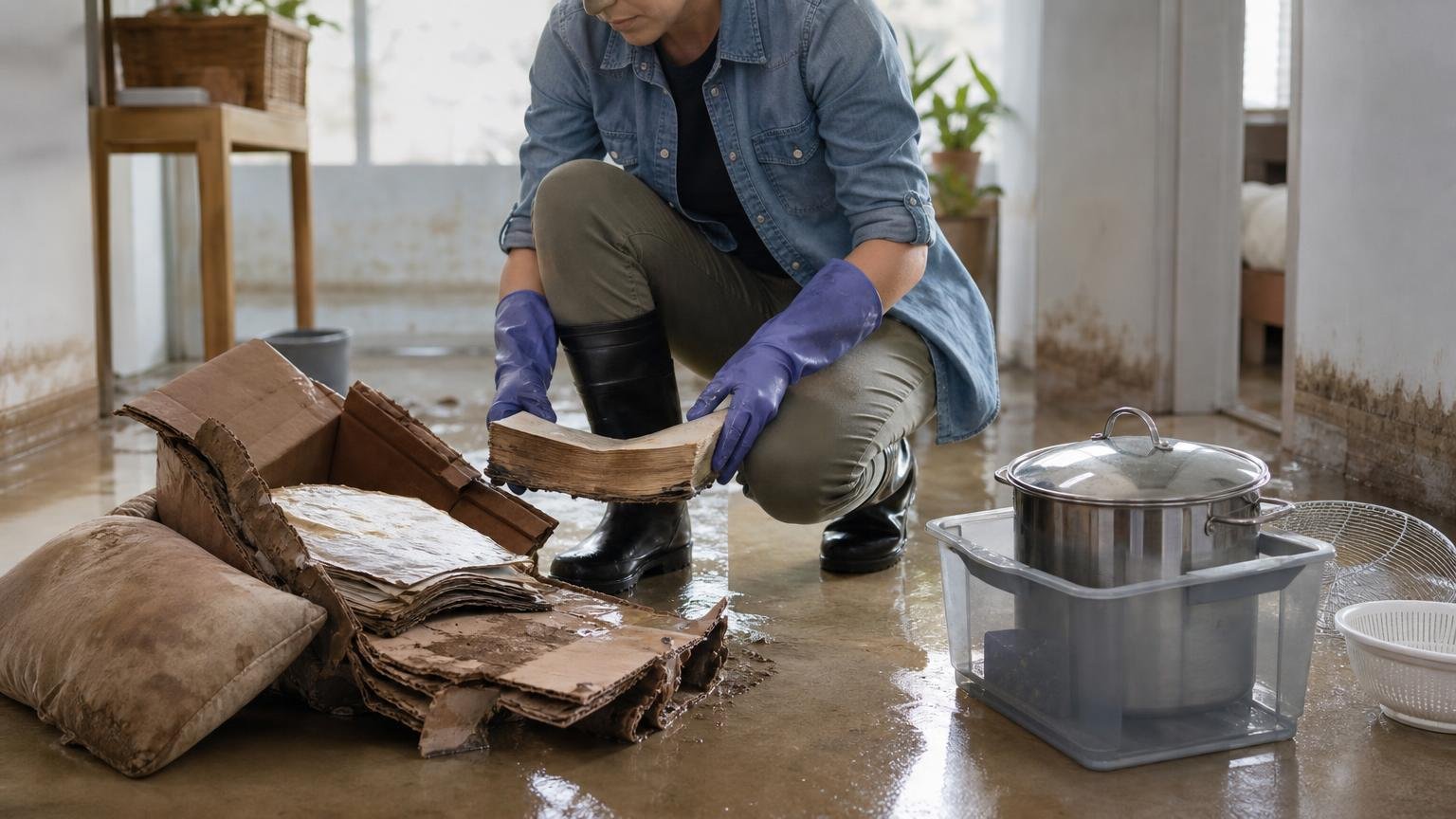
- Mattresses, pillows and foam-rubber items
- Carpets, carpet padding and rugs
- Upholstered furniture
- Stuffed toys and baby toys
- Cosmetics
- Books and other paper products
- Wall coverings
Drywall and insulation contaminated by floodwater or sewage should also be removed and discarded. Moldy porous building materials, including carpet and ceiling tiles, may be impossible to clean fully because growth can extend into spaces beneath the surface.
Flooded walls and flooring need to be assessed before repair. Do not refinish, close or replace them until the affected area and remaining materials are completely dry.
What may be cleaned and kept
Hard, non-porous surfaces and some washable furniture may be cleaned with hot water and detergent, then dried completely. The US Environmental Protection Agency similarly advises scrubbing hard surfaces with detergent and water before thorough drying.
An item is a stronger candidate for cleaning when:
- Its surfaces can be reached and scrubbed
- It has not absorbed water deep into porous material
- It can be dried fully and promptly
- It is not damaged beyond safe use
Wear protective gloves, goggles and an N95 respirator while cleaning flood-damaged areas. If structural instability, damaged electrical systems, contaminated water or hazardous building materials may be present, stop and seek qualified help rather than relying on protective equipment alone.
Using bleach safely
CDC guidance describes a mold-cleaning mixture of 1 cup of household bleach per 1 gallon of water. However, bleach products and concentrations vary internationally. Follow the product label and current local public-health guidance, and never mix bleach with ammonia or other cleaners.
Do not assume that applying bleach makes every porous item safe to retain. Materials that cannot be cleaned internally and dried completely may still require disposal.
Food exposed to floodwater
Discard any food that came into contact with floodwater. FoodSafety.gov also advises throwing away food in packaging that is not waterproof, including:
- Cardboard boxes containing juice, milk or infant formula
- Home-canned food
- Containers with screw caps, snap lids or snap tops
- Containers with crimped caps, twist caps or flip tops
Only undamaged, commercially prepared metal cans and sealed metal or plastic retort pouches are candidates for salvage. Containers that are bulging, leaking, open, badly dented or otherwise damaged must be discarded.
FoodSafety.gov provides two sanitizing options for sound cans and retort pouches: immersion for 15 minutes in a solution of 1 cup, or 240 millilitres, of unscented bleach in 5 gallons of water, or boiling for two minutes. This is a food-container procedure and is different from the CDC mold-cleaning mixture. Product labels and current local health guidance should take precedence where instructions differ.
Food safety after a power outage
Flooding may also cause a power loss. An unopened refrigerator keeps food cold for about four hours. A full freezer maintains its temperature for approximately 48 hours, while a half-full freezer does so for about 24 hours.
Discard perishable food that has remained above 40°F or 4°C for two hours. When the surrounding temperature is above 90°F or 32°C, the limit is one hour.
Medicines and floodwater
Medicines that contacted floodwater or potentially unsafe water should be discarded, even if they remained inside their original screw-top, snap-lid or dropper containers. Do not use medicine that is wet or visibly altered.
Temperature-sensitive medicines affected by a power outage need product-specific advice. Check the labelled storage instructions and consult a pharmacist, healthcare provider or manufacturer. There is no single safe temperature or outage duration that applies to every medicine.
The US Food and Drug Administration describes a narrow exception when flood-exposed medicine is needed for a life-threatening condition and no replacement is available: if it appears unchanged, it may be used until it can be replaced. Seek professional advice rather than abruptly stopping an essential medicine.
When to call a professional
The EPA says a homeowner can generally consider handling a mold area smaller than about 10 square feet, roughly a 3-by-3-foot patch. This is a general decision threshold, not a guarantee that every smaller cleanup is safe.
Professional assessment or remediation is appropriate when:
- Mold covers more than about 10 square feet
- There is extensive water damage
- Sewage or other contaminated water is involved
- The heating, ventilation or air-conditioning system may be contaminated
- An occupant has health concerns
- The building may be structurally unstable
- Electrical systems are damaged
- Lead-based paint or asbestos may be disturbed
Suspected asbestos-containing flooring should be handled by an asbestos professional. When hiring a mold-remediation contractor, look for relevant experience and check references.
Do not pump out deep water too quickly
If several feet of standing water remain inside the home, do not remove it rapidly without professional guidance. The EPA warns that sudden changes in water pressure can crack or collapse walls and floors. It does not provide one universal pumping rate, so the appropriate approach depends on the building and conditions.
A practical decision guide
- Discard it: The item is porous, absorbed floodwater and cannot be cleaned internally or dried within the recommended timeframe.
- Clean it: The item has a hard, washable surface, remains intact and can be scrubbed and dried completely.
- Get specialist advice: The cleanup involves sewage, extensive mold, deep standing water, structural or electrical damage, possible HVAC contamination, asbestos, lead paint or health concerns.
What This Means
When deciding what to throw away after a flood, material and contamination matter more than appearance alone. A hard surface that can be washed and completely dried may be recoverable. A mattress, upholstered chair, wet drywall or other absorbent material may hold moisture and contamination beyond the visible surface and should generally be discarded when it cannot be cleaned and dried quickly.
Begin drying within 24 to 48 hours if conditions are safe, but do not let that target push you into hazardous work. Contaminated water, extensive mold, deep standing water and building hazards can justify professional help regardless of the size of the affected area.
